ABOUT THE EXPOSITION
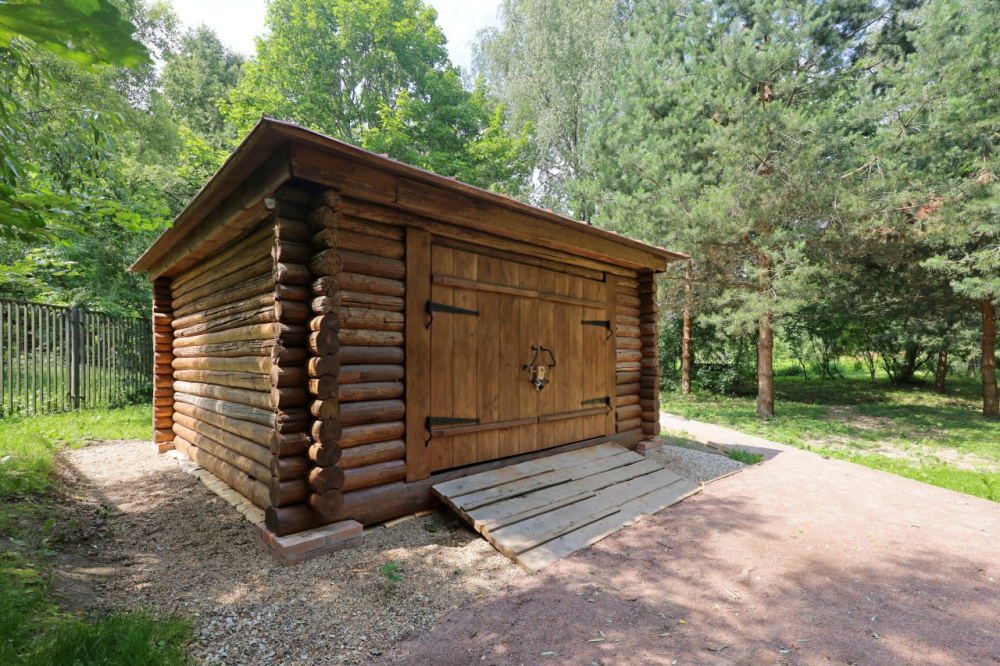
The fire station shed was built here in 1896. It is one of the few buildings that have survived to this day in Melikhovo. This shed is an important part of the historical and cultural heritage associated with Anton Chekhov's life and work in his estate here.
The named timber building is located to the northeast of Chekhov's main house, but historically, this site was not part of the estate - it belonged to the village. However, it was Anton Pavlovich who initiated the construction of such a building.
Unfortunately, fires were a common occurrence in Melikhovo. The vast majority of the roofs of peasant huts were made of straw, and the houses were heated in the so-called "black heating method". This meant that stoves in their houses had no chimneys; so smoke from burning wood would escape directly inside the house and then be vented through the windows. As a disaster, the fire indiscriminately destroyed both peasant huts and manor houses.
And soon, during his first year living at the estate, Chekhov, on March 29, wrote to Lika Mizinova, a close friend of his younger sister Mary, to tell her about the fire in the village:
"At night, the manor of landowner Madame Kuvshinnikova, which is next to our house, was burned down to the ground. This is a sign of warning for us. Our house and garden were brightly illuminated by the fire, the church bells were ringing, and the people were making lots of noise, but we didn't hear or see anything because we were sound asleep."
In January 1895, the manor house of this neighbor was destroyed by fire once again, and on October 8th, another major fire broke out in the village.
Anton Chekhov, recognizing the need for fire prevention, started soliciting in building a fire station with all necessary firefighting equipment and digging a fire pond in the village of Melikhovo.
By the autumn of 1896, the fire station shed in Melikhovo was built... and immediately tested for practice — In November of the same year, another fire occurred in the village. This time, however, it was the residence of the Chekhov family that caught fire.
The writer's father, Pavel Egorovich, wrote in his diary on November 26th:
"In the evening, the wooden beams above the stove in my Mom's room suddenly caught fire. The Knyaz (prince) and the Father took part in extinguishing the fire, and the village men managed to put out the fire with a water pump in half an hour."
The exhibition features a wide range of fire-fighting equipment, including a four-wheel cart, buckets, axes, hooks, pitchforks, a hook, a barrel, a crowbar, and a ladder.
However, the most interesting exhibit at the display is the fire water pump designed by Gustav List's company, a native of Germany. It was him who founded his first small factory for such needed items in Moscow in 1863.


